


Hi, it’s David Lambert, and welcome to The Business Growth Blueprint, my bi-weekly newsletter where I delve into the critical elements of business growth—strategy, leadership, operations, and the technologies shaping tomorrow. Subscribe to join 2,400+ readers who get The Business Growth Blueprint delivered to their inbox every week.
Introduction
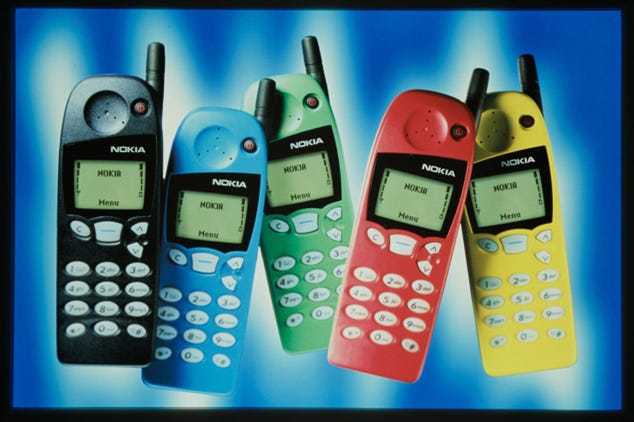
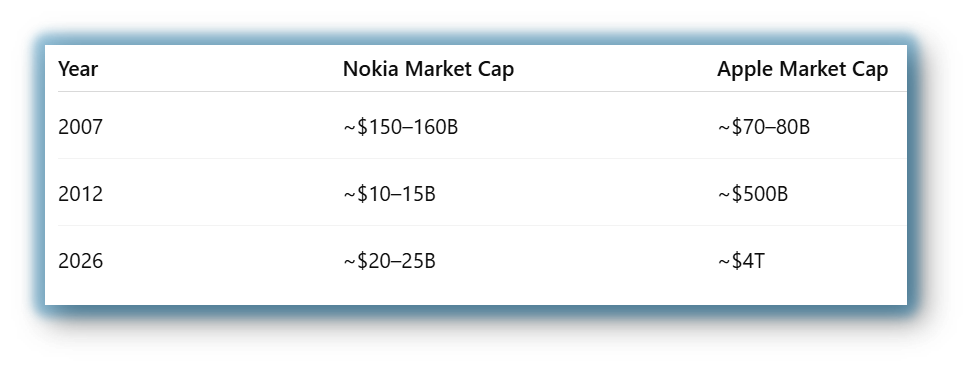
At the start of the 2000s, Nokia was the undisputed leader of the mobile phone industry. The company controlled roughly 40% of the global handset market, held the title of Europe’s most valuable company, and built a reputation for nearly indestructible devices. To put this in perspective, Apple’s share today is 20%.
For millions of people around the world, a mobile phone was simply a Nokia. I even had one….a company-provided phone…I was “high class”.
Yet within a decade, that dominance vanished.
The fall of Nokia is often mischaracterized as a story of technological failure or managerial incompetence. In reality, it was something far more instructive. Nokia had talented engineers, enormous scale, and deep industry knowledge. What it struggled with was recognizing and responding to a platform shift that was reshaping the entire industry.
The company that mastered the era of hardware phones was suddenly competing in the era of software ecosystems, ushered in by devices like the iPhone and platforms such as Android.
What followed wasn’t an overnight collapse, but a gradual erosion driven by strategic drift, cultural rigidity, and the difficulty large organizations face when the rules of competition change.
Nokia’s story is not just about a phone company that lost its way. It’s a case study in how even the strongest market leaders can miss the moment when their industry fundamentally changes.
Let’s dig in.
Please feel free to comment and subscribe - it’s free!
The Rise: Operational Excellence at Scale
Operational Mastery
Nokia’s rise to global dominance was not the result of a lucky product cycle or a temporary market advantage. It was built on operational excellence. At its peak, Nokia operated one of the most efficient supply chains in the consumer electronics industry.
The company could design, manufacture, and distribute new handset models at a pace competitors struggled to match. Nokia also cultivated deep relationships with mobile carriers worldwide, ensuring its devices were widely distributed and heavily promoted across Europe, Asia, and emerging markets.
For those not aware, Nokia was founded in 1865 as a pulp mill and is headquartered in Finland.
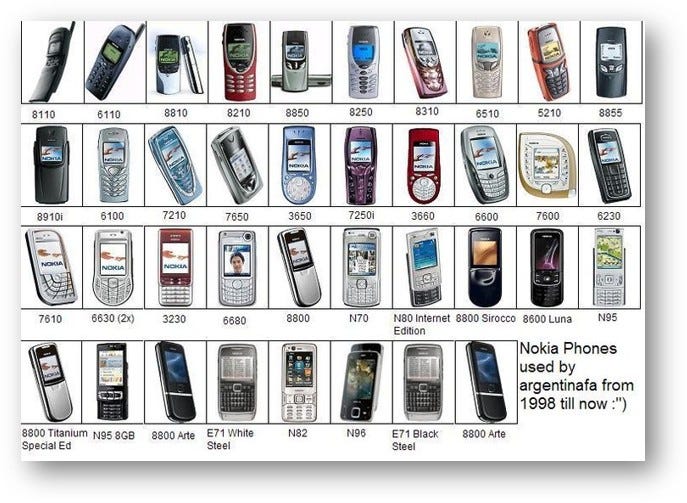
Equally important was Nokia’s rapid hardware iteration cycle. The company released dozens of device variations tailored to different regions, price points, and customer preferences. This allowed Nokia to dominate both premium and entry-level segments simultaneously.
Combined with an unmatched global distribution scale, these capabilities made Nokia extraordinarily effective in the hardware-driven era of mobile phones, where success depended on manufacturing efficiency, carrier partnerships, and product reliability.
Brand Equity
Operational strength alone does not explain Nokia’s dominance. The company also built one of the most trusted consumer technology brands in the world. To millions of consumers, a Nokia phone represented durability, long battery life, and reliability. The devices were known for surviving drops, lasting days on a single charge, and simply working when people needed them.
In an era before app stores and mobile ecosystems, those attributes were exactly what consumers valued most. A phone was primarily a communication tool, not a computing platform or a way to post on Facebook. Nokia understood the market perfectly. Its products were simple to use, dependable, and widely available. As a result, the Nokia brand became synonymous with the mobile phone itself in many parts of the world.
Timing
Nokia also benefited from extraordinary timing. The company’s operational model and product strategy aligned perfectly with the mass global adoption of mobile phones throughout the 1990s and early 2000s. As billions of people around the world purchased their first mobile device, Nokia had already built the manufacturing capacity, distribution networks, and carrier partnerships necessary to scale quickly.
In many ways, Nokia was the ideal company for the feature-phone era. It was engineered for scale, efficiency, and reliability. Qualities that defined the first phase of the mobile industry’s growth.
But the strengths that made Nokia dominant in the hardware era did not prepare it for what came next. The industry was about to shift from devices to platforms, and Nokia’s organization was not built for that transition.
Why Nokia Lost the Smartphone War
They Misread the Shift from Hardware to Software
It’s common to hear that Apple Inc. killed Nokia. The reality is more nuanced. When the iPhone launched in 2007, it wasn’t simply a better mobile device. It represented a fundamental change in what a phone was becoming.
The iPhone introduced a model built around software, developers, and digital services. The device was merely the entry point to a broader ecosystem, one that included applications, content, cloud services, and a continuously evolving user experience.
Apple was not just selling phones; it was building a platform that developers and customers would build their digital lives around.
Meanwhile, Nokia continued optimizing the variables that had driven success in the feature-phone era: hardware quality, device variety, manufacturing scale, and carrier distribution. In effect, Nokia was still playing a hardware margin game, while Apple, and soon after Google with Android, were playing a platform control game. Those are fundamentally different strategies, and the platform strategy ultimately reshaped the industry.
Internal Culture Became Defensive
The strategic miscalculation was compounded by internal dynamics that made adaptation more difficult. Postmortems and interviews with former executives later revealed that, during this period, Nokia’s culture had grown increasingly defensive and risk-averse. Managers were reluctant to surface bad news, and critical feedback often softened as it moved up the organizational hierarchy.
This phenomenon is not unique to Nokia. It frequently occurs in dominant firms that have experienced prolonged success or where leaders don’t react well to bad news. Past victories create confidence, but they can also create organizational inertia. Leaders begin to trust the systems that previously produced results, even when market conditions are changing. Over time, that inertia slows decision-making precisely when speed and clarity are most needed.
The Symbian Trap
Technology choices also played a significant role. Nokia’s primary operating system, Symbian, had been designed for an earlier generation of mobile devices. While powerful in some respects, it had become complex, difficult for developers to work with, and architecturally outdated compared with emerging smartphone platforms.
Rather than decisively rebuilding around a modern software foundation early on, Nokia attempted to evolve Symbian through incremental improvements. This approach consumed valuable time while competitors advanced rapidly. By the time Nokia partnered with Microsoft in 2011 to adopt the Windows Phone platform, the ecosystem battle had largely consolidated around Apple’s iOS and Google’s Android. In platform markets, late pivots are rarely successful, because developers and users tend to converge around a small number of dominant ecosystems.
Strategy by Compromise
Finally, Nokia struggled with the strategic trade-offs that disruptive change requires. The company attempted to balance multiple priorities simultaneously: protecting its profitable feature-phone business, maintaining strong relationships with mobile carriers, and managing internal divisions that favored different technical paths.
The result was a series of cautious, incremental decisions at a moment when the market was undergoing a nonlinear transformation. Instead of fully committing to a new model, Nokia tried to evolve its existing one. That strategy works in stable markets, but disruptive shifts tend to reward bold transitions and punish incremental responses. By the time the scale of the change became undeniable, the competitive landscape had already been reshaped.
What Leaders Can Learn
Dominance Breeds Blindness
One of the most important leadership lessons from the rise and fall of Nokia is that market leadership can quietly distort decision-making. Success builds confidence, but it can also create powerful blind spots. Organizations that dominate their industry often develop strong internal beliefs about why they are winning. Over time, those beliefs harden into assumptions.
Those assumptions produce predictable patterns: confirmation bias in strategy discussions, risk aversion around disruptive ideas, and internal politics that protect existing business models. The organization begins optimizing what already works rather than questioning whether the rules of the market are changing.
For leaders, the critical question is not whether the strategy is currently working, it often is. The real question is far more uncomfortable: What assumption in your business, if wrong, would collapse your strategy? The companies that survive major industry shifts are the ones willing to interrogate those assumptions early.
Platforms Beat Products
Nokia mastered the economics of the product era of mobile phones. Its advantage came from supply chain efficiency, device variety, and global distribution. But the smartphone revolution changed the nature of competition. Success was no longer defined by who could build the best handset; it was defined by who controlled the ecosystem around the device.
Companies like Apple Inc. and Google understood that the smartphone would become a software platform, supported by developers, services, and continuously improving user experiences. Apple focused on user experience and ecosystem integration, while Google built a massive developer network through the Android platform.
The lesson is that when markets shift from product to ecosystem, from transaction to experience, from device to platform, the capabilities required to win change dramatically. Organizations that continue optimizing yesterday’s advantage often find themselves competing in the wrong game
Culture Determines the Speed of Adaptation
Another lesson from Nokia’s decline is that strategic failure is rarely caused by a lack of intelligence. Large organizations are filled with capable leaders and talented engineers. The issue is usually organizational courage.
When internal cultures discourage dissent or slow the flow of bad news, leaders lose the ability to see threats clearly. Critical market signals arrive late, decisions take longer, and strategic adjustments become incremental when they need to be decisive.
This connects closely to a broader leadership principle: urgency is not about moving faster; it’s about confronting reality earlier. Organizations that surface uncomfortable truths quickly can adapt before disruption becomes irreversible. Those who delay recognition often find that the window for meaningful response has already closed.
Cannibalize Yourself First
Perhaps the most enduring lesson from industry disruption is that incumbents must be willing to challenge their own success. When a new model threatens an existing revenue stream, the instinct inside large organizations is often to protect the legacy business for as long as possible.
But disruption rarely waits. Companies that survive major shifts are usually those willing to reinvent themselves before competitors force the change. That can mean launching products that undermine existing revenue, separating teams to pursue new models independently, or redesigning incentives to reward internal disruption rather than protect the status quo.
The companies that fail tend to defend what made them successful. The companies that endure are the ones willing to replace it.
What Is Nokia Doing Now?
A Different Company Than the One That Dominated Phones
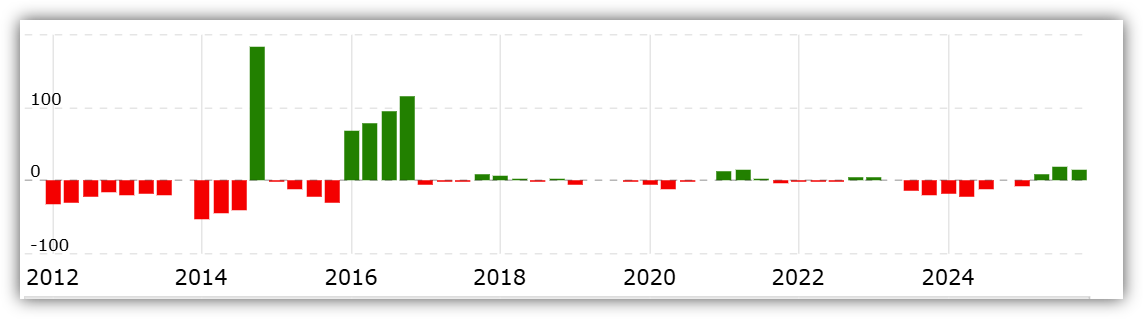
Although its handset dominance collapsed, Nokia did not disappear. Instead, the company underwent a significant transformation. In 2014, Nokia sold its mobile handset business to Microsoft, marking the end of its era as a consumer mobile device leader.
That transaction closed the chapter on Nokia’s role in the smartphone wars and allowed the company to focus on a different segment of the telecommunications industry.
Today, Nokia operates primarily as a telecommunications infrastructure and network technology company rather than a consumer electronics brand.
Focus on Network Infrastructure and 5G
Nokia’s modern business centers on building and supporting the networks that power global connectivity. The company provides 5G network equipment, fiber and broadband solutions, cloud networking technologies, and enterprise private networks used by telecom operators, governments, and large enterprises.
In this role, Nokia competes with major infrastructure providers such as Ericsson and Huawei. Instead of selling devices to consumers, Nokia now focuses on the systems and software that allow communications networks to operate and scale.
This shift also reflects the industry’s broader movement toward software-defined networking and integrated digital infrastructure, where network intelligence is increasingly managed through software rather than purely hardware-based systems.
This transformation reflects a deliberate effort to focus on areas where Nokia’s engineering expertise and telecommunications heritage remain highly relevant.
A New Brand for a New Business
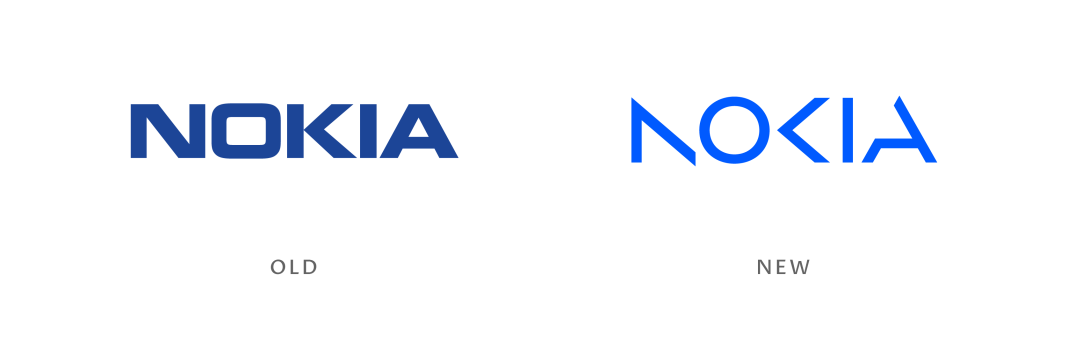
In 2023, Nokia unveiled a refreshed corporate brand identity designed to reflect this strategic shift. The new branding signaled that the company no longer sees itself as a consumer phone manufacturer but as a network technology company helping build the infrastructure of the digital economy.
The story of Nokia, therefore, is not simply one of decline. It is also a story of reinvention. The company survived one of the most dramatic industry disruptions in modern technology, but it emerged as a fundamentally different business than the one that once dominated the global mobile phone market.
Conclusion
The story of Nokia is often told as a cautionary tale about technological disruption. But the deeper lesson is not about technology at all. It is about how organizations respond when the rules of their industry change.
Nokia did many things right. It built world-class operations, created enormous brand equity, and scaled globally faster than almost any hardware company of its era. For years, those strengths made it nearly unstoppable. The problem was not that Nokia lacked intelligence or talent. The problem was that the company continued optimizing a model that the market had already begun to abandon.
Meanwhile, companies like Apple Inc. and Google recognized that mobile phones were becoming something different: software platforms connected to ecosystems of developers, services, and experiences. By the time that shift became undeniable, the competitive landscape had already been rewritten.
For leaders and operators, the real takeaway is this: the strategies that create dominance rarely survive the next industry transition. Markets evolve. Technologies change. Business models shift. The question is not whether disruption will occur; it is whether organizations will recognize it early enough to respond.
The companies that endure are not always the smartest or the largest. They are the ones willing to question their own success, challenge their assumptions, and reinvent themselves before the market forces them to.
Because in business, the greatest risk is rarely failure.
It is believing that yesterday’s winning formula will still work tomorrow.
Sources
Insights and perspectives in this newsletter are informed by leadership research, technology industry analysis, and historical reporting on the mobile phone industry, including:
Harvard Business Review. Case analyses on the rise and decline of Nokia, organizational inertia, and the challenges incumbents face during platform shifts
The Economist. Reporting and analysis on Nokia’s collapse in the smartphone era and the strategic implications of the iPhone and the rise of the smartphone ecosystem
McKinsey & Company. Research on digital platform competition, ecosystem economics, and how industry leaders respond to technological disruption
Benedict Evans. Technology industry analysis on mobile platform dynamics, ecosystem competition, and the strategic implications of Android and iOS platform growth
Yves Doz & Keeley Wilson. Strategic analysis of Nokia’s rise and fall and the organizational dynamics behind its decline (Ringtone: Exploring the Rise and Fall of Nokia in Mobile Phones)
Ben Thompson. Platform strategy analysis and commentary on the transition from hardware-centric competition to ecosystem-driven technology markets (Stratechery)
"Cannibalize yourself first" - this might be the hardest thing to do, in business and in life.