


Hi, it’s David Lambert, and welcome to The Business Growth Blueprint, my bi-weekly newsletter where I delve into the critical elements of business growth—strategy, leadership, operations, and the technologies shaping tomorrow. Subscribe to join 2,400+ readers who get The Business Growth Blueprint delivered to their inbox every week.

Introduction
A sense of urgency is one of the most frequently requested and least understood leadership traits.
Most organizations claim they want it. Leaders talk about it constantly. Job descriptions call for it. Performance reviews reference it. Strategy decks demand it. And yet, very few teams actually operate with urgency in a way that produces real progress.
That’s because urgency has quietly been redefined. It’s been confused with speed. With busyness. With pressure. With noise. With “everything is a priority” energy.
None of those things are urgency.
When I was in the military, we had a phrase that captured the difference perfectly:
Smooth is fast. And fast is smooth.
It sounds like a contradiction until you live it. But what it really means is simple: when you’re disciplined, clear, and controlled, you move faster overall. When you rush, thrash, and try to “go fast” by force, you create mistakes, rework, and friction, which slow everything down.
That’s exactly what most leaders miss about urgency.
True urgency is not about moving faster; it’s about moving decisively. It’s not about doing more, it’s about doing what matters now. And it rarely feels chaotic when it’s real. In fact, the best examples of urgency often feel calm, focused, and slightly uncomfortable because they force trade-offs most leaders prefer to avoid.
I learned this lesson early in my career, long before I had an executive title.
As a young leader, I was part of an organization facing a clear operational issue, one that everyone agreed needed fixing. Meetings were held. PowerPoint decks were built. Follow-ups were scheduled. The problem was discussed endlessly, with a constant refrain of “we need to move faster.”
Weeks passed. Then months.
What struck me wasn’t a lack of effort. People were busy. Calendars were full. Emails were flying. What was missing was ownership. No one was willing to make the call that would create friction. No one wanted to be the person who said, “This is the decision, this is the path, and this is what we’re stopping to make it happen.”
That’s when it clicked: the organization didn’t lack urgency; it lacked conviction.
Later, in environments where urgency actually existed, whether in high-stakes operational settings or during periods of real transformation, the behavior looked very different. Fewer meetings. Clear owners. Short timelines. Explicit trade-offs. And leaders who understood that urgency is not created by pressure from the top, but by clarity, trust, and decisiveness at every level.
Most leaders don’t get urgency wrong because they don’t care. They get it wrong because they mistake motion for momentum, and urgency without direction is just noise.
And noise, no matter how loud, rarely moves anything forward.
Let’s dig in.
Please feel free to comment and subscribe - it’s free!
False Urgency vs. Productive Urgency
Many leaders believe they are creating a sense of urgency, but they often instill anxiety instead. False urgency is loud, feels intense, and creates motion, but it rarely leads to real progress.
You can quickly identify false urgency by noting the following signs:
Everything is labeled “priority one.”
Meetings increase, not decisions.
Timelines shorten while the scope remains unchanged.
Teams stay busy, but outcomes do not significantly improve.
Leaders ask for updates instead of taking decisive action.
False urgency is reactive and feeds on fear: fear of missing targets, fear of being questioned, and fear of slowing down. Over time, it trains teams to focus on activity rather than impact.
In contrast, productive urgency looks very different. It is quieter, more deliberate, and far more effective.
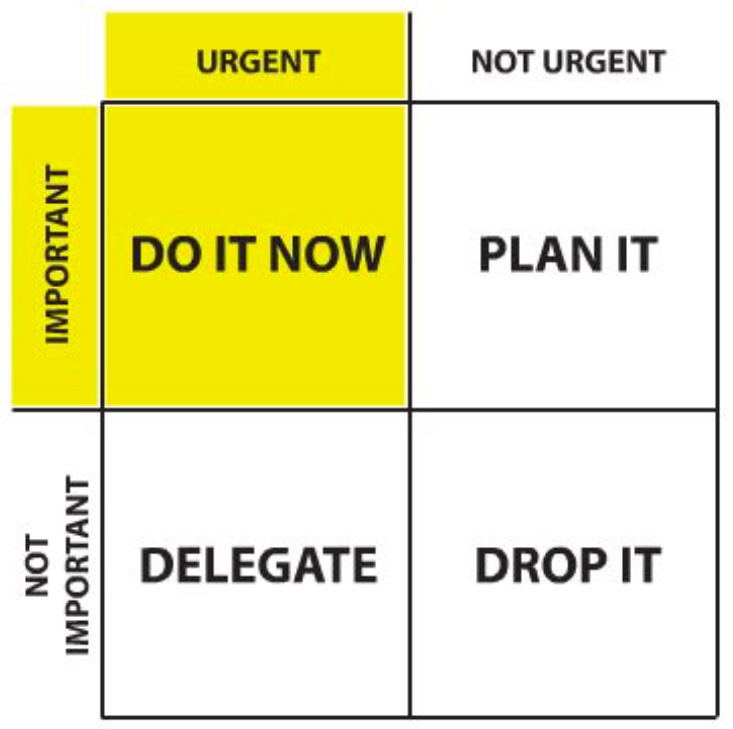
Productive urgency begins with clarity. Leaders must clearly communicate what is important now, what can wait, and what is not important at all. This clarity is both rare and powerful.
It requires ownership: one person is accountable for the outcome rather than a committee or a working group. Progress is actively owned, not just reviewed. Productive urgency also demands trade-offs; something must be stopped, postponed, or deprioritized. Without trade-offs, what appears to be urgency is merely a performance.
Productive urgency is reinforced through decisions, not reminders. Teams feel urgency when leaders make real choices that demonstrate seriousness, rather than simply stating, “This is urgent.”
Here’s a simple test to consider: If nothing is being stopped, delayed, or declined, then there is no true urgency, only activity.
High-performing teams understand this intuitively. They do not rush everything; instead, they move quickly on the few things that truly matter and deliberately slow down on everything else. This is not a lack of urgency; it is discipline.
Two Case Studies: When Urgency Works and When It Doesn’t
Case Study 1: The Pitfall of False Urgency
A mid-sized services organization identified a decline in customer retention and labeled it “urgent.” In response, leadership created task forces, scheduled weekly meetings, and built dashboards to monitor progress. Updates were requested constantly.
However, no decisive action was taken. No one was authorized to change pricing, service levels, or account structures. Each proposed solution required cross-functional alignment, and every review raised new risks. As a result, timelines slipped quietly, justified as “getting it right.”
After six months, customer churn had not improved significantly, yet the organization was exhausted. The real problem was not a lack of effort; it was avoidance. The expressed urgency came through pressure and process rather than ownership and trade-offs. The organization was constantly busy but made no tangible progress.
Case Study 2: Effective Urgency in Action
In contrast, another organization faced margin erosion in a core business line. Leadership recognized this as a priority, but not a panic.
They assigned a single executive with full decision-making authority and set a 90-day timeframe. Three options were outlined from the start, including walking away from unprofitable work.
Within weeks, leadership made visible trade-offs: they exited contracts, narrowed project scopes, and reallocated resources. While some stakeholders were unhappy with these decisions, the team moved forward.
By the end of the quarter, margins had stabilized, and confidence returned, not because everyone agreed but because the organization saw decisions being made and respected them.
The key difference wasn’t intelligence, resources, or a sense of urgency. It was leadership. One organization mistook busy activity for progress, while the other used clarity, ownership, and accountability to create genuine urgency.
Why Leaders Accidentally Kill Urgency
Most urgency failures are not cultural problems. They stem from leadership behaviors, often well-intentioned, that quietly smother momentum.
Here are the most common ones.
1. Confusing Inclusion With Consensus
Leaders want alignment. That’s reasonable. But many organizations drift from input to permission. When every decision requires broad agreement, urgency dies. Teams learn that waiting is safer than acting, and escalation becomes a substitute for ownership.
Urgency thrives when leaders are clear about where input is valuable and where a decision will be made regardless.
2. Rewarding Risk Avoidance While Demanding Speed
Organizations often say, “Move fast,” while punishing mistakes harshly. That contradiction is not lost on teams.
When the cost of being wrong exceeds the cost of being slow, people delay every time. They add analysis. They request one more review. They wait for cover.
Leaders don’t create urgency by demanding it. They create it by protecting decisive action when outcomes are imperfect but directionally correct.
3. Treating Prioritization as a Messaging Exercise
Many leaders believe urgency is established when priorities are communicated. It isn’t. Urgency is established when leaders act in accordance with those priorities:
Resources are reallocated.
Meetings are canceled.
Pet projects are paused.
Senior leaders visibly shift their time.
When stated priorities don’t change behavior, teams correctly conclude that nothing is actually urgent.
4. Solving the Same Problem Repeatedly Instead of Making the Hard Call
One of the clearest signs of a lack of urgency is repetition. If the same issue appears in reviews quarter after quarter, it’s rarely a capability problem. It’s a decision problem.
Urgency demands finality. Not every decision will be perfect—but unresolved decisions quietly drain momentum far more than imperfect ones ever will.
5. Believing Urgency Is a Personality Trait
Some leaders assume urgency is something you either have or don’t. That’s a mistake.
Urgency is not a temperament. It is a system of clarity, accountability, and consequences. When those are present, urgency emerges naturally. When they aren’t, no amount of motivational language will create it.
How Leaders Create Urgency (Without Creating Burnout)
Real urgency is not something leaders demand. It is something they design.
The most effective leaders don’t rely on speeches, slogans, or escalating pressure. They build environments where urgency is the natural outcome of how decisions are made, work is structured, and accountability is enforced.
Here’s what that looks like in practice.
1. They Make Time Horizons Explicit
Urgent organizations are clear about when something matters.
Leaders distinguish between:
What must happen now
What must happen next
What can wait
Without this clarity, teams default to treating everything as immediate, and eventually, nothing is. Urgency is created when leaders are precise about timing and unapologetic about sequencing.
2. They Assign Single-Point Ownership
Urgency does not survive shared accountability. High-performing leaders assign one accountable owner for outcomes, not updates, not coordination, not facilitation. One owner.
That owner has the authority to make decisions, escalate constraints, and move forward without waiting for universal agreement. When ownership is clear, momentum follows.
3. They Force Trade-Offs in Public
Nothing signals urgency faster than visible trade-offs. Leaders who create urgency say things like:
“We are pausing this to finish that.”
“This no longer makes the cut.”
“We’re narrowing the scope to move now.”
These decisions are uncomfortable. They disappoint some stakeholders. And they make urgency real. If leaders are unwilling to disappoint, urgency will remain theoretical.
4. They Decide at the Right Altitude
Urgency dies when decisions sit too high or too low. Great leaders push decisions down to the lowest level capable of making them, while pulling only the irreversible or high-risk calls up.
This balance accelerates action without sacrificing quality. Teams move faster because they are trusted and because they know when escalation is truly required.
5. They Reinforce Urgency Through Consequences, Not Words
What leaders tolerate defines the pace of the organization. Deadlines that slip without consequence teach teams that timing is optional. Priorities that change weekly teach teams to wait things out.
Urgency is reinforced when leaders:
Hold timelines firm
Close loops decisively
Address delays directly
Reward follow-through, not heroics
Consistency, not intensity, is what sustains urgency over time.
Conclusion
A lack of urgency is rarely a workforce problem. It is a leadership signal.
It signals unclear priorities. Avoided decisions. A fear of disappointing stakeholders. A system that rewards safety over progress. None of those are fixed by asking people to “move faster.”
Urgency is not created through pressure. It is created through clarity, conviction, and consistency.
Teams move with urgency when they trust that decisions will stick. When ownership is real. When trade-offs are honored. When leaders act the same way on Friday afternoon as they do in Monday morning meetings.
The best leaders understand this instinctively. They do not manufacture urgency. They remove the obstacles that prevent it. They decide. They focus. They commit.
And in doing so, they give their teams permission to move. If your organization feels busy but stuck, the answer is not more intensity. It is better leadership.
Because when urgency is real, it doesn’t feel frantic. It feels inevitable.
Sources
Insights and perspectives in this newsletter are informed by leadership research, management literature, and industry analysis, including:
John P. Kotter — Research on real vs. false urgency, decision velocity, and the leadership behaviors required to sustain momentum (A Sense of Urgency, Harvard Business School Press)
Harvard Business Review — Analysis on decision paralysis, consensus culture, and why organizations struggle to translate activity into action
McKinsey & Company — Studies on decision effectiveness, organizational speed, and the impact of clear ownership and trade-offs on execution outcomes
Amy C. Edmondson — Research on psychological safety, accountability, and how trust enables decisive action without burnout (The Fearless Organization)
Bain & Company — Findings on founder-led organizations, forced trade-offs, and the relationship between decision clarity and performance
Andy Grove — Management frameworks on decision altitude, leverage, and operational discipline (High Output Management)